Powered by WebAds

Monday, January 21, 2008

An open letter to the world

Cross currents has a post written by R' Avi Shafran responding to the anti-Semitic piece written by Arun Gandhi for the "On Faith" blog. The response is ok but the article by Gandhi brought to my mind a letter written in 1988. In 1988 an open letter to the world was submitted anonymously to various Jewish press outlets. Most of them ran the piece. After the letter was already published, Rav Meir Kahane Zt"l Hy"d came out as the author of the letter at which point all these outlets apologized for running it. Funny how the content of the letter seemed fine to them before they found out who wrote it. In any case, here is the text of the open letter:

Dear World,

It Appears That You Are Hard To Please.

I understand that you are upset over us, here in Israel. Indeed, it appears that you are quite upset, even angry and outraged? Indeed, every few years you seem to become upset over us. Today, it is the brutal repression of the Palestinians; yesterday, it was Lebanon; before that it was the bombing of the nuclear reactor in Baghdad and the Yom Kippur War campaign. It appears that Jews who triumph and who, therefore, live, upset you most extraordinarily. Of course, dear world, long before there was an Israel, we, the Jewish people - upset you. We upset a German people who elected a Hitler and we upset an Austrian people who cheered his entry into Vienna and we upset a whole slew of Slavic nations - Poles, Slovaks, Lithuanians, Ukrainians, Russians, Hungarians, Romanians. And we go back a long, long way in the history of world upset. We upset the Cossacks of Chmielnicki who massacred tens of thousands of us in 1648-49; we upset the Crusaders who, on their way to liberate the Holy Land, were so upset at Jews that they slaughtered untold numbers of us. We upset, for centuries, a Roman Catholic Church that did its best to define our relationship through Inquisitions. And we upset the arch-enemy of the Church, Martin Luther, who, in his call to burn the synagogues and the Jews within them, showed an admirable Christian ecumenical spirit.

It is because we became so upset over upsetting you, dear world, that we decided to leave you - in a manner of speaking - and establish a Jewish State.

The reasoning was that living in close contact with you, as resident-strangers in the various countries that comprise you, we upset you, irritate you, disturb you. What better notion, then, than to leave you and thus love you - and have you love us? And so we decided to come home - to the same homeland from which we were driven out 1,900 years earlier by a Roman world that, apparently, we also upset. Alas, dear world, it appears that you are hard to please. Having left you and your Pogroms and Inquisitions and Crusades and Holocausts, having taken our leave of the general world to live alone in our own little state - we continue to upset you.

You are upset that we repress the poor Palestinians. You are deeply angered over the fact that we do not give up the lands of 1967, which are clearly the obstacle to peace in the Middle East. Moscow is upset and Washington is upset.

The Arabs are upset and the gentle Egyptian moderates are upset. Well, dear world, consider the reaction of a normal Jew from Israel. In 1920, 1921 and 1929, there were no territories of 1967 to impede peace between Jews and Arabs. Indeed, there was no Jewish State to upset anybody. Nevertheless, the same oppressed and repressed Palestinians slaughtered hundreds of Jews in Jerusalem, Jaffa, Safed and Hebron. Indeed, 67 Jews were slaughtered one day in Hebron - in 1929. Dear world, why did the Arabs - the Palestinians - massacre 67 Jews in one day in 1929? Could it have been their anger over Israeli aggression in 1967?

And why were 510 Jewish men, women and children slaughtered in Arab riots in 1936-39? Was it because of Arab upset over 1967? And when you, World, proposed a U.N. Partition Plan in 1947 that would have created a Palestinian State alongside a tiny Israel and the Arabs cried and went to war and killed 6,000 Jews - was that upset stomach caused by the aggression of 1967? And, by the way, dear world, why did we not hear your cry of upset, then?

The poor Palestinians who today kill Jews with explosives and firebombs and stones are part of the same people who - when they had all the territories they now demand be given them for their state - attempted to drive the Jewish State into the sea. The same twisted faces, the same hate, the same cry of "idbah-al-yahud" - "Slaughter the Jews!" that we hear and see today, were seen and heard then. The same people, the same dream - destroy Israel. What they failed to do yesterday, they dream of today - but we should not "repress" them..............

Dear world, you stood by the Holocaust and you stood by in 1948 as seven states launched a war that the Arab League proudly compared to the Mongol massacres. You stood by in 1967 as Nasser, wildly cheered by wild mobs in every Arab capital in the world, vowed to drive the Jews into the sea. And you would stand by tomorrow if Israel were facing extinction. And since we know that the Arabs-Palestinians daily dream of that extinction, we will do everything possible to remain alive in our own land. If that bothers you, dear world, well - think of how many times in the past you bothered us. In any event, dear world, if you are bothered by us, here is one Jew in Israel who could not care less.

Sunday, November 18, 2007

And we are supposed to make peace with these people?

'93% of Palestinian kids suffer domestic violence'

Will all you insane so called "moderates" PLEASE give me a break.

Sunday, October 14, 2007

Random thoughts

I have been reading/learning several books at once lately. I found a couple of passages that shocked me even though I should of seen it coming.

The first I will title "Rav Soloveitchik the mystic???" (from Lonely Man of Faith p. 40-41):

The Covenantal faith community, in contradistinction to the natural work community, interprets the divine pronouncement "It is not good for man to be alone," not in utilitarian but in ontological terms: it is not good for man to be lonely (not alone) with emphasis placed upon "to be." Being at the level of the faith community does not lend itself to any equation. "To be" is not to be equated with "to work and produce goods" (as historical materialism wants us to believe). "To be" is not identical with "to think" (as the classical tradition of philosophical rationalism throughout the ages, culminating in Descartes and later in Kand, tried to convince us). "To be" does not exhaust itself either in suffering (as Schopenhauer preached) or in enjoying the world of sense (in accordance with ethical hedonism). "To be" is a unique in-depth experience of which only Adam the second is aware, and it is unrelated to any function or performance. "To be" means to be the only one, singular and different, and consequently lonely. For what causes man to be lonely and feel insecure if not the awareness of his uniqueness and exclusiveness? The "I" is lonely, experiencing ontological incompleteness and casualness, because there is no one who exists like the "I" and because the modus existentiae of the "I" cannot be repeated, imitated, or experienced by others.
Wow! I have noticed that many of the rationalists bloggers reject the reality of a spiritual realm. A realm which is separate from both the intellectual and emotional. It seems to me that Rav Soloveitchik is discussing just such a reality.

Second and unrelated. I am once again going through the classic Greek philosophers. My current project is Plato's "The Republic", here is a passage which really illustrated to me the gulf between "Chochma" and "Torah" (Part Three, Book Three, 410):
This then is the kind of medical and judicial provision for which you will legislate in your state. It will provide treatment for those of your citizens whose physical and psychological constitution is good; as for the others, it will leave the unhealthy to die, and those whose psychological constitution is incurably corrupt it will put to death.
Don't know why it shocked me. I knew both these things before but sometimes a gap forms between your knowledge and your expectations and things which you already knew can shock you anew!

Sunday, August 12, 2007

לְמַעַן צִיּוֹן לֹא אֶחֱשֶׁה

ישעיהו פרק סב
א לְמַעַן צִיּוֹן לֹא אֶחֱשֶׁה, וּלְמַעַן יְרוּשָׁלִַם לֹא אֶשְׁקוֹט, עַד-יֵצֵא כַנֹּגַהּ צִדְקָהּ, וִישׁוּעָתָהּ כְּלַפִּיד יִבְעָר. ב וְרָאוּ גוֹיִם צִדְקֵךְ, וְכָל-מְלָכִים כְּבוֹדֵךְ; וְקֹרָא לָךְ שֵׁם חָדָשׁ, אֲשֶׁר פִּי יְהוָה יִקֳּבֶנּוּ. ג וְהָיִית עֲטֶרֶת תִּפְאֶרֶת, בְּיַד-יְהוָה; וצנוף (וּצְנִיף) מְלוּכָה, בְּכַף-אֱלֹהָיִךְ. ד לֹא-יֵאָמֵר לָךְ עוֹד עֲזוּבָה, וּלְאַרְצֵךְ לֹא-יֵאָמֵר עוֹד שְׁמָמָה--כִּי לָךְ יִקָּרֵא חֶפְצִי-בָהּ, וּלְאַרְצֵךְ בְּעוּלָה: כִּי-חָפֵץ יְהוָה בָּךְ, וְאַרְצֵךְ תִּבָּעֵל. ה כִּי-יִבְעַל בָּחוּר בְּתוּלָה, יִבְעָלוּךְ בָּנָיִךְ; וּמְשׂוֹשׂ חָתָן עַל-כַּלָּה, יָשִׂישׂ עָלַיִךְ אֱלֹהָיִךְ. ו עַל-חוֹמֹתַיִךְ יְרוּשָׁלִַם, הִפְקַדְתִּי שֹׁמְרִים--כָּל-הַיּוֹם וְכָל-הַלַּיְלָה תָּמִיד, לֹא יֶחֱשׁוּ; הַמַּזְכִּרִים, אֶת-יְהוָה--אַל-דֳּמִי, לָכֶם. ז וְאַל-תִּתְּנוּ דֳמִי, לוֹ: עַד-יְכוֹנֵן וְעַד-יָשִׂים אֶת-יְרוּשָׁלִַם, תְּהִלָּה--בָּאָרֶץ. ח נִשְׁבַּע יְהוָה בִּימִינוֹ, וּבִזְרוֹעַ עֻזּוֹ: אִם-אֶתֵּן אֶת-דְּגָנֵךְ עוֹד מַאֲכָל, לְאֹיְבַיִךְ, וְאִם-יִשְׁתּוּ בְנֵי-נֵכָר תִּירוֹשֵׁךְ, אֲשֶׁר יָגַעַתְּ בּוֹ. ט כִּי מְאַסְפָיו יֹאכְלֻהוּ, וְהִלְלוּ אֶת-יְהוָה; וּמְקַבְּצָיו יִשְׁתֻּהוּ, בְּחַצְרוֹת קָדְשִׁי. {ס}

י עִבְרוּ עִבְרוּ בַּשְּׁעָרִים, פַּנּוּ דֶּרֶךְ הָעָם; סֹלּוּ סֹלּוּ הַמְסִלָּה סַקְּלוּ מֵאֶבֶן, הָרִימוּ נֵס עַל-הָעַמִּים. יא הִנֵּה יְהוָה, הִשְׁמִיעַ אֶל-קְצֵה הָאָרֶץ, אִמְרוּ לְבַת-צִיּוֹן, הִנֵּה יִשְׁעֵךְ בָּא; הִנֵּה שְׂכָרוֹ אִתּוֹ, וּפְעֻלָּתוֹ לְפָנָיו. יב וְקָרְאוּ לָהֶם עַם-הַקֹּדֶשׁ, גְּאוּלֵי יְהוָה; וְלָךְ יִקָּרֵא דְרוּשָׁה, עִיר לֹא נֶעֱזָבָה. {ס}


Isaiah Chapter 62
1 For Zion's sake will I not hold My peace, and for Jerusalem's sake I will not rest, until her triumph go forth as brightness, and her salvation as a torch that burneth. 2 And the nations shall see thy triumph, and all kings thy glory; and thou shalt be called by a new name, which the mouth of the LORD shall mark out. 3 Thou shalt also be a crown of beauty in the hand of the LORD, and a royal diadem in the open hand of thy God. 4 Thou shalt no more be termed Forsaken, neither shall thy land any more be termed Desolate; but thou shalt be called, My delight is in her, and thy land, Espoused; for the LORD delighteth in thee, and thy land shall be espoused. 5 For as a young man espouseth a virgin, so shall thy sons espouse thee; and as the bridegroom rejoiceth over the bride, so shall thy God rejoice over thee. 6 I have set watchmen upon thy walls, O Jerusalem, they shall never hold their peace day nor night: 'Ye that are the LORD'S remembrancers, take ye no rest, 7 And give Him no rest, till He establish, and till He make Jerusalem a praise in the earth.' 8 The LORD hath sworn by His right hand, and by the arm of His strength: Surely I will no more give thy corn to be food for thine enemies; and strangers shall not drink thy wine, for which thou hast laboured; 9 But they that have garnered it shall eat it, and praise the LORD, and they that have gathered it shall drink it in the courts of My sanctuary. {S} 10 Go through, go through the gates, clear ye the way of the people; cast up, cast up the highway, gather out the stones; lift up an ensign over the peoples. 11 Behold, the LORD hath proclaimed unto the end of the earth: say ye to the daughter of Zion: 'Behold, thy salvation cometh; behold, His reward is with Him, and His recompense before Him.' 12 And they shall call them The holy people, The redeemed of the LORD; and thou shalt be called Sought out, a city not forsaken. {S}

Were coming back home!

Wednesday, August 01, 2007

What I look like

Some people asked me who I am so I decided to drop a hint by posting a picture of myself (see here):

Monday, July 23, 2007

שיבנה בית המקדש

יהי רצון מלפניך ה' אלוקינו ואלוקי אבותינו, שיבנה בית המקדש במהרה בימינו ותן חלקנו בתורתך. ושם נעבדך ביראה כימי עולם וכשנים קדמוניות


Monday, July 02, 2007

Well, its a start

[UPDATE: Apparently, the source for the YNet article was an article in Arutz 7. It has more quotes which are more complete and have the relevant sources. You can see it here.]

Well, its a start:

Journalist Ilana Dayan: How is it that we all blindly followed Oslo?...Why didn't we ask whether disengagement was the right step?"

TV personality Avri Gilad: I supported the disengagement plan and I was wrong…the orange (pro-settlement camp) was right.

Journalist and political commentator Yaron London: Nothing has been built on the ruins except terrorist training camps…"

Playwright Yehoshua Sobol: I wouldn't like to see us folding from Judea and Samaria once again and to see Qassam rockets being fired on Kfar Saba, Ra'anana and Herzliya…"

Major-General Yiftah Ron Tal: (Commander of the land forces during the disengagement): I cannot understand why Israel relinquished parts of its land voluntarily and passionately, and how it turned settlers connected to the land into criminals…

Journalist and TV personality Yair Lapid: The calmest front at the moment is in Judea and Samaria. Heretic thoughts are suddenly occupying the minds of the staunchest leftists: Perhaps it's not the occupation?

Alon Gershon Hacohen (in charge of disengagement in the Gaza Strip): The disengagement was a crime, and I was a partner to a crime against the Jewish people…the Second Lebanon War is the punishment…"

Journalist Dan Margalit: I had hoped that it would be possible to achieve bi-national peace between the River Jordan and the Sea; however, there is nothing to discuss…a man should not be expelling another from his home; moreover, a Jew should not be expelling another Jew.

Journalist Yoel Marcus: It appears that the extremist settlers …were the ones who were right. The Palestinians turned Gush Katif into a base for ongoing fire…"

Now lets see if any of the bloggers in bloggerland who supported this crime will fess up and admit their mistake. Come on, you know who you are.

Tuesday, June 26, 2007

Israeli Western

The good, the bad, and the ugly.

Monday, April 30, 2007

In more news...

Olmert, Peretz, Halutz failed in their roles, war report says

In more news...

The Allies won WWII.

AND

The sun rose this morning.

Thursday, April 26, 2007

Did Ben Gurion want a Jewish state?

Ben-Bayit has an important post which I will reproduce with some translation:

Amnon Lord in a recent column claims the answer is NO. In a wide-ranging discussion of the recent "revelations" that Teddy Kollek served as a British "informer" prior to 1948, Lord comes to the conclusion that what drove the Mapai during the 1940's was enabling absolute political hegemony over the "Yishuv" and in order to do that they cooperated with the British in 2 crucial areas: 1) keeping the local Jewish population quiet insofar as to what was happening to Jews in Europe. and 2) cooperating in uprooting the Jewish underground groups such as the Irgun and the Lehi.

According to Lord, the Mapai's purpose in all of this was to maintain political control - not necessarily to advance the cause of an independent Jewish state. For that matter he claims that Mapai was perfectly happy remaining in political control as a British vassal - as long as they had political control.
ב-1945, נוכח המאבק המתפתח בין בריטניה לבין המעצמות העולות - ברית המועצות וארצות הברית - על ארץ ישראל והמזרח התיכון, היה האינסטינקט הפחדני של הנהגת הסוכנות, קרי בן-גוריון ושרת, לקבל חסות ופרוטקשן מהשלטון הבריטי הקיים. מפא"י בכלל לא חתרה להקמת מדינה יהודית, אלא עודדה את הבריטים להישאר; המדינה היהודית הוקמה כמדינת אין-ברירה כאשר היה ברור שהבריטים זונחים את בן-גוריון וחבריו ומפקירים אותם לגורלם, אולי בציפייה שאלה יזעיקו אותם חזרה כדי להינצל משחיטה.

In 1945, in light of the conflict which was forming between Britain and the rising superpowers, the USSR and the USA, it was the cowardly instinct of the Agency leadership, that is Ben Gurion and Sharet, to receive protection from the British regime. Mapai made no efforts to establish a Jewish state, rather it encouraged the British to stay; the Jewish state was created as a "no-other-choice" state when it became clear that the British are abandoning Ben-Gurion and his friends and are leaving them to their own fate, perhaps with the hopes that this group [Ben Gurion] will call [the British] back in order to same themselves from [Arab] slaughter.
מבחינה מדינית, התנהגות כמו ההלשנה של טדי קולק יכולה לקבל צידוק רק אם האוריינטציה החד-צדדית לכיוון בריטניה מוכיחה את עצמה. אלא שהנהגת היישוב לא קיבלה שום דבר בתמורה לשיתוף הפעולה שלה במשך שנות המלחמה. עד 1942 ניתן היה להעלות ארצה אלפי יהודים כדי להצילם מידי הגרמנים, אך הבריטים לא אפשרו זאת, והנהגת הישוב המפא"יניקית לא לחצה עליהם ואפילו סייעה לעצור ספינות עולים. אותה אוריינטציה בריטית לא הניבה שום פרי גם אחרי המלחמה, באותה תקופה גורלית שבין מלחמת העולם למלחמת העצמאות. בניגוד למיתוס האקדמי התעמולתי הנפוץ היום, כאילו "העולם" שהרגיש אשם בגלל השואה הקים את המדינה היהודית, הבריטים, שהיו חלק קובע ב"עולם" הזה, בלמו עלייה לארץ והתנגדו נחרצות להקמת המדינה. הם גם עודדו את הערבים לתקוף את מדינת ישראל לאחר הכרזת העצמאות. לא ברור אם כך איזו תועלת לאומית ומדינית יכלה לצמוח ממדיניות הסזון. נראה שבאותה תקופה פוסט-מלחמתית שיתוף הפעולה של תחילת שנות ה-40 כבר הפך לעסק מושחת, לסימביוזה שארוחה אנינה של צדפות, רוסט-ביף ויין טוב, כפי שמופיע בדיווח על הפגישות בין קולק למפעיליו, מסמלת את מהותה.

From a political perspective, behavior such as the informing on Jews by Teddy Kollek can only receive legitimacy if the one-sided orientation towards Britain proves itself. Unfortunately, the leadership of the settlement receive nothing in return for their cooperation during the years of the war. Until 1942 it was possible to bring to Eretz Yisrael thousands of Jews in order to save them from the Germans, but the British did not allow this, and the Mapai leadership of the settlement did not pressure them and even aided them in capturing [illegal] immigrant ships. The same pro-British orientation did not give any fruit even after the war - during that fateful period between the world war and the war of independence. in contrast to the propagandistic academic mythology which is so popular today, as if the "world" which felt guilty because of the Holocaust established the Jewish state, the British, who were key players in this "world" obstructed immigration of Jews and firmly opposed a Jewish state. They also encouraged the Arabs to attack the state of Israel after the declaration of independence. It is thus unclear what kind of political or national benefit could have arisen out of the policy of informing on Jews [the "season"]. It seems that in that same post-war period, the cooperation of the early 40s had been transformed into a corrupt enterprise. [It transformed] into a symbiosis whose essence is captured by refined clam dinners, roast beef and good wine (as meetings between Kolek and his operators are described).
It is worth noting that not only was Kollek involved in informing on underground fighters, but he was also the one, as Lord points out, who handed over Joel Brand to the British - thus preventing his attempt at rescuing Hungarian Jewry.
באוטוביוגרפיה של שמואל תמיר, שיצאה שנים לאחר מותו, יש תיאור מפורט של "קליטתו" של יואל ברנד בקושטא על ידי אהוד אבריאל וטדי קולק. מי שקורא את הקטעים האלה לא יכול שלא להגיע למסקנה שמעצרו של ברנד על ידי הבריטים באחת מתחנות הרכבת בוצע בעזרתם הפעילה של קולק ואבריאל, כלומר שהם תפקדו כסוכנים בריטים. הסגרתו של יואל ברנד, שבא להציע לבריטים את העסקה של אייכמן להצלת יהודי הונגריה, נועדה קודם כל למנוע ממנו לקומם את דעת הקהל בארץ ובעולם היהודי. אפשר להתווכח אם היו סיכויים כלשהם לביצוע עסקת ה"משאיות תמורת דם"; אבל ודאי שניתן היה, בעזרת יואל ברנד, לבצע הרעשת עולמות על טבח יהודי הונגריה. זה בדיוק מה שהנהגת היישוב פחדה ממנו לאורך כל תקופת השואה, שמא דעת הקהל היהודית בארץ תצא משליטה.

In Shmuel Tamir's autobiography, which was published years after his death, there is a detailed description of Joel Brand's "absorption" in Istanbul by Ehud Avriel and Teddy Kolek. Whoever reads these sections can not help but arrive at the conclusion that Brand's arrest by the British in one of the train stations was achieved through the active aide of Kolek and Avriel, that is, that they acted as British agents. The handing over of Joel Brand, who came to offer the British Eichman's deal for the rescue of Hungarian Jewry, was intended primarily to keep him from stirring public opinion in Eretz Yisrael and in the Jewish world. One can argue whether there was any chance of success for the "trucks for blood" deal; But it is certain that it was possible, with the help of Joel Brand, to create a world-wide shakeup regarding the slaughter of Hungarian Jewry. This is precisely what the leadership of the Yeshuv feared throughout the entire Holocaust, lest the Jewish public opinion in Eretz Yisrael will move beyond its control.
So on this Holocaust Memorial Day and Independence Day period all I could think about was two things: 1) How the leaders of the Zionists (and later the State) will often do anything to maintain political power - and thus can't be trusted with our welfare and 2) How miraculous it is that the Jews have a state despite of all this.
Chag Sameach!!!

Tuesday, April 24, 2007

How to play the game

I was amazed at the following story (from here).

Apparently, the winner of this year's Tanach competition is Yishai Gispan who won by a single point. That is not the amazing part. During the competition, he turned to the judges and asked them to reconsider the points he received for a previous answer. Apparently, he felt the he DID NOT DESERVE the full score!

Has anyone heard of something like this happening before? I have not. It shows tremendous yashrut and strength of character to do what Yishai did.

Yashar Koach and let us pray that our educational institutions will continue to produce kids who not only have knowledge of the Torah but have also integrated the Torah's underlying message!

Tuesday, March 27, 2007

Rav Kook on Pesach and Redemption

I know I have not been blogging lately. I have been busy and have not found myself motivated to lately. I know I still have several series which I need to wrap up – God willing, I will soon continue those posts. Meanwhile, I hope everyone enjoys the following ideas by Rav Kook which are very relevant for Pesach.

Rav Kook writes in Orot (translated by R’ Bezalel Naor):

The redemption continues. The redemption from Egypt and the complete redemption of the future are one unending action: the action of the strong hand and outstretched arm, which began in Egypt and works though all eventualities. Moses and Elijah are redeemers in a single redemption; the beginner and the ender, the opener and closer together fill the unit. The spirit of Israel hears the sound of the movements, the redemptive actions, brought about through all eventualities until the sprouting of redemption will be complete, in all its plentitude and goodness.
Also, in Moadei HaRayah (also translated by R’ Naor):
The exodus from Egypt only appears to be a past event. But in truth, the exodus never ceases. The arm of God that was revealed in Egypt to redeem the Jews is constantly outstretched, constantly active. The revelation of the hand of God is the breaking through of the light of God, shining great lights for all generations.
I can not begin to stress how important these ideas are. The difference between the view which sees the exodus as a particular event and the view which sees it as a continuing process is spectacular. God willing, I will one day write a post on the significance of these passages. Just as a hint, keep in mind that Rav Kook saw the spirit of Moses (Torah) and the spirit of Eliyahu (Redemption) as being paradoxically at odds with each other. Each employs forces which strain the other. The Final redemption, in the view of Rav Kook, is the reconciliation of these two forces. Also keep in mind that during the seder night, we do not mention Moshe but do leave a central role for Eliyahu.

Monday, March 12, 2007

נקמה לאומית

Wow.

Can't say I feel sorry for the guy.

VeLamalshinim Al ....

Friday, March 09, 2007

רב צבי יהודה הכהן קוק זצ"ל

Rabbi Zvi Yehuda HaKohen Kook Zt"l passed away 25 years ago during Purim.

Rabbi Hannan Porat has an interesting article about Rav Zvi Yehuda here.

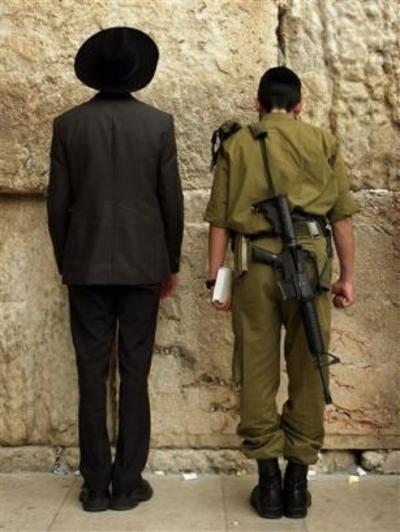
What I found interesting (and never new before) was that Rav Zvi Yehuda was the inspiration behind Yossi Gamzu's famous Hebrew song הכותל.

Apparently, when Rav Zvi Yehuda reached the Kotel only hours after it was liberated, he said "יש לבבות אבנים, ויש אבנים לבבות" (There are hearts of stone and there are stones with heart). This was formulated into the refrain of the song as follows:

הכותל – איזוב ועצבת
הכותל – עופרת ודם
יש אנשים עם לב של אבן
יש אבנים עם לב אדם.
What I never knew before was that there is actually an extra stanza to the song which was never recorded and which is specifically about Rav Zvi Yehuda at the Kotel.

The extra stanza is:
עמד מול הכתל עמנו
הרב הישיש בתפילה.
אמר לי: אשרי שזכינו כולנו,
ושב ונזכר: לא כולם …

עמד בדמעה מתנוצצת
יחיד בין עשרות חיילים
אמר לי: מתחת לחאקי, בעצם,
כולכם כהנים ולווים …
I find this a beautiful and appropriate addition to a beautiful song.

In case you don't know it, here are the lyrics for the song as it is commonly recorded:
הכותל - אזוב ועצבת,
הכותל - עופרת ודם.
יש אנשים עם לב של אבן,
יש אבנים עם לב אדם.

עמדה נערה מול הכותל
שפתיים קרבה וסנטר.
אמרה לי: "תקיעות השופר חזקות הן,
אבל השתיקה עוד יותר..."

אמרה לי: "ציון הר הבית"
שתקה לי: "הגמול והזכות",
ומה שזהר על מצחה בין ערביים
היה ארגמן של מלכות.

הכותל - אזוב ועצבת,
הכותל - עופרת ודם.
יש אנשים עם לב של אבן,
יש אבנים עם לב אדם.

עמד הצנחן מול הכותל,
מכל מחלקתו רק אחד
אמר לי: "למוות אין דמות אך יש קוטר -
תשעה מילימטר בלבד..."

אמר לי: "אינני דומע",
ושב להשפיל מבטים,
"אך סבא שלי, אלוהים היודע,
קבור כאן בהר הזיתים".

הכותל - אזוב ועצבת...

עמדה בשחורים מול הכותל
אמו של אחד מן החי"ר.
אמרה לי: "עיני נערי הדולקות הן
ולא הנרות שבקיר".

אמרה לי: "אינני רושמת
שום פתק לטמון בין סדקיו.
כי מה שנתתי לכותל רק אמש,
גדול ממילים ומכתב".

הכותל - אזוב ועצבת...

Wednesday, March 07, 2007

Promising new blog

I just found a promising new blog, Tsmicha.

The author, Dan Illouz, has a great post on a famous statement of Rav Kook:

"המזכירים כרכים ומוקפים מימות יהושע בן נון לא יוכלו להישאר עבדי אחשוורוש"

“They who mention towns and walled cities from the days of Yehoshu’a bin Nun are unable to remain servants of Ahashverosh”


May he succeed in spreading the redemptive Torah of Rav Kook to all the corners of cyberspace.

Sunday, February 25, 2007

Jerusalem on my mind

"... There are places in Jerusalem with which I am familiar and know about, and yet when I happen upon them it seems to me that I have never seen them before. Yet, in contrast, there are places where I have never been, and when I come there it seems to me that I am familiar with and know them.

And because I have always wandered the streets of Jerusalem by day and by night, I never had the time to learn any craft. Worse than that, I was not occupied with the study of the Torah, and a Jew who does not study the Torah is admonished by his heart: What will you say on the Day of Judgment when they ask you "Did you study Torah?" And what will I say? I will say that I studied Jerusalem, and I am certain that they will say to me - "You have done well." And it seems to me that the words that I have prepared as an answer for the Day of Judgment were acceptable to my heart as well, and it no longer chides me.

Sometimes my heart even wandered about with me from place to place and rejoiced with me - until I left Jerusalem and went to a foreign land and spent there all the days of the Great War and some years after, not by my own volition, until the Almighty brought me back to my place, to Jerusalem.

And because my soul overflowed that the Almighty had brought me back to my place and I could walk about Jerusalem as in the days of old, I broke forth with praise of the Lord and of Jerusalem, the city that the Almighty had selected of all His creation. Even though He exiled Himself, as it were, from her, He did not take away her uniqueness."
S.Y. Agnon, Lifnim Min HaHomah

Thursday, February 15, 2007

A New BAN!!! (Just in time for Purim)

(Hattip: Jameel)

Tuesday, February 06, 2007

Naveh's crimes

AddeRabbi posts a congratulatory post to R' Bina for coming to the defense of the Thug Yair Naveh.

I thought the Lev Yehudi's response to R' Bina was far more appropriate (hat tip: Ya'aqov Ben-Yehudah):

Lev Yehudi Poster

Regarding the four Crimes of Naveh

1. Expulsion

Yair Naveh, as general of the central command, was the commander over the expulsion of Jews and the destruction of Jewish towns in the Northern Shomron, a year and a half ago.

2. Pogrom

Exactly one year ago, Yair Naveh was the commander over all of the Yasam (riot police) and regular police forces which implemented the intentional pogrom in Amona.

3. Incitement

Yair Naveh incites additional expulsion and uprooting
the uprooting of hilltop [communities] in Judea and Samaria, in his own words, calling them "rebellious strongholds."

4. Silent Expulsion

Yair Naveh has signed over 20 restraining and keep-away orders against town and hilltop residents, expelling them from their homes and families, for many months, without any due process, nor any compensation.

Are the kippah on Naveh's head or his positive, past acts able to cover up his crimes?

"Be strong and courageous" to Ya'ir Naveh?!


In an ad supporting Naveh, Rabbi Bina praises "the man strong in spirit, your correctness in sacrificing up soul and body for the sake of the Land of Israel, Torath Yisrael, and the Jewish People, in every place at all times and in every hour."

Rabbi Binah: Where have you been the few years?

Rabbi Binah: Whose "soul and body" does Ya'ir Navah sacrifice?

"Justifying evil...is an abomination of HaShem"

Protest helps: Join the public protest against Ya'ir Naveh

Lev Yehudi

Tuesday, January 30, 2007

Keter Malkhut

Here is R' Bezalel Naor's translation of a poem by R' Shlomo ibn Gabirol (ca. 1021-1058):

You are God,
And all the creatures are Your servants and worshipers.
Your glory is not lessened on account of those who worship other gods,
Because the intention of all is to reach You.
But they are as blind men.
Their goal is the way of the King,
And they have strayed from the way.
One has drowned in a bottomless well.
Another has fallen in a ditch.
All thought they arrived at their destination,
And they strove for nought.
But Your servants are seeing;
They go in a straight way.
They deviate from the path neither right nor left,
Until they reach the courtyard of the King.
What strikes me is the identification of failure in the search for God with a static PLACE. Those that understand that the search for God is of necessity a PATH and not a place (which can never be arrived at) are the ones who truly see. The religious paradox is that once you consider yourself to have found this, you are by definition "off the path" and as long as you are on "on the path", then you are "closer” to that which you seek. I find this to be a highly mystical idea but, amazingly, I have only found it hinted at in two rishonim, both of whom have a decidedly rationalistic tendency. The first is ibn Gabirol and the second is the Meiri in this book on teshuva which I will leave for another post.

Sunday, January 14, 2007

Rav Kook on mystical thought, freedom, and the self

Orot HaKodesh I, pg. 86:

"Knowledge of the highest secret matters is not meant to spread through the world in a great expansion, that many may know of them, for it is impossible. And if many know of them in their external aspect, they will know nothing of their internal content, and all this will do more harm than good. Indeed, this knowledge must penetrate to all secrets that contain a divine element of supreme contemplation. And those individuals unique in their spiritual height, raise the world from its degredation by their very existence and not by their tangible influence."

Perakim be-Mishnato ha-Iyunit shel ha-Rav Kook, II, pp. 55-56:
"My thoughts are wider than the seas; to express them in prosaic words I cannot, for I am unwillingly forced to be a poet, yet one who is free. I could not be bound in the fetters of meter and rhyme. I flee from simple prose, from its heaviness, its constriction, and I could not put myself in other confines, perhaps even bigger and more depressing than the weight of the prose from which I flee."

Arpelei Tohar, pg. 59:
"Mystical knowledge is unique in every individual. It is bound up with his selfhood, is unrepeatable and transmitted by no sound or explanation. "They shall be yours only" (Mishlei 5:17). A righteous man shall live by his own, his very own faith. And from this luminous faith, which forms a seperate Eden-paradise for him, he goes forth to walk in the gardens of the Lord, bounded as public domain, where his mind intermingles with that of his fellows."

Arpelei Tohar, pg. 40:
"We feel this 'spiritual muteness,' alas, how much we have to say, how great is the light of justice and wisdom illuminating us in the depth of our souls, but how shall we discover it, how clarify it, how will we utter and bring forth even the tiniest edge of that sublime brightness, for that, the gates are shut before us. In prayer we approach them, with supplication we knock, in joy and praise we raise our voices, offering allegory and thoughts, keeping watch by the doors, perhaps they will open a crack, only a needle's breadth before us, and words will stream from our mouths, and our tongues will be as flowing streams, rivers of honey and butter."


Yep, that pretty much describes how I feel. And as I start to imagine the sweet smell of the air of the land of Israel, to which I am, b"H returning this comming summer, I start to long for that clarity which can only exist in the land. At shul friday night, I saw a friend carying Rav Charlop's Mei Marom. I commented that I have never seen that sublime book outside of the land. My friend commented that this is because all who can appreciate this book have made their way back home already. Hashiveinu Hashem veNashuva, Hadesh Yameinu keKedem!